EP09
|
|||||||||||||||||||||||||||||||||||||||||||||||||||||||||||||||||||||||||||||||||||||||||||||
|
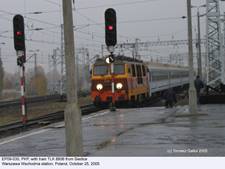
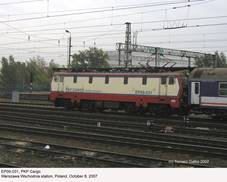
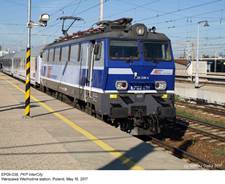
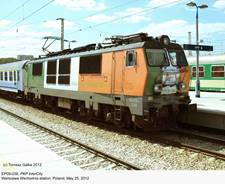
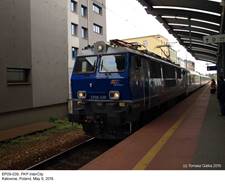
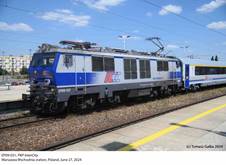
EP09-030 approaching a platform at the Warszawa Wschodnia
station on a misty and rainy morning of
Ten days later: better weather and better photo.
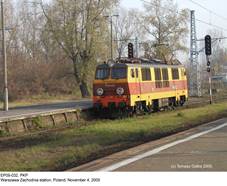
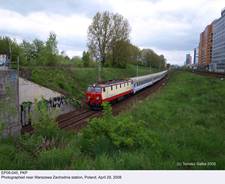
EP09-032 maneuvering at the Warszawa Zachodnia
station.
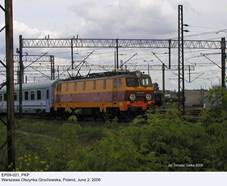
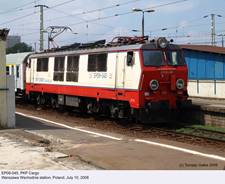
EP09-021, photographed near the Warszawa Olszynka Grochowska depot on
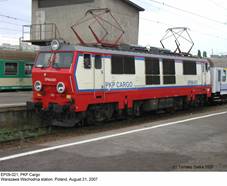
The same example in new livery: Warszawa Wschodnia station,
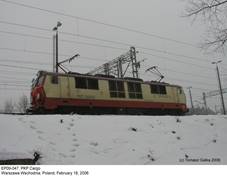
EP09-047, the last example built, was one of the
first to feature then-new PKP Cargo
livery, introduced in late 2005; single-arm current collectors were fitted to
several production machines. This photo was taken near the Warszawa Wschodnia station on
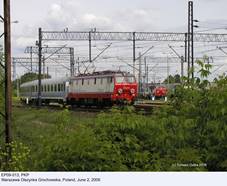
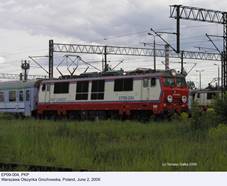
Two further pictures taken near the Warszawa Olszynka Grochowska depot on
...and EP09-004; note slightly different variant of
the PKP Cargo livery.
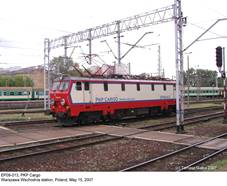
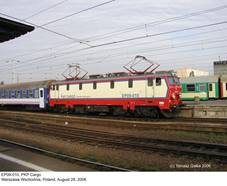
Another picture of the EP09-013, taken at the
Warszawa Wschodnia station on
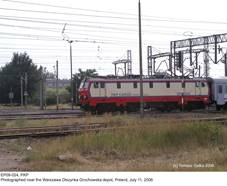
EP09-024, photographed near Warszawa Olszynka Grochowska depot on
Two locomotives photographed at the Warszawa Wschodnia station on
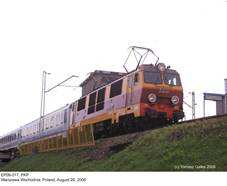
...and old (EP09-017).
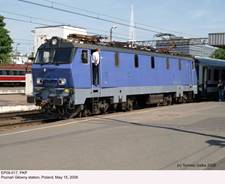
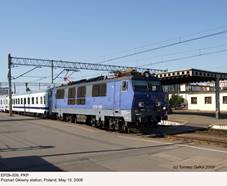
EP09-17, repainted in PKP
InterCity blue and with new headlights, photographed at the
Poznan Główny station on
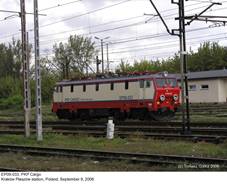
Two EP09s, photographed at the Kraków
Płaszów station on
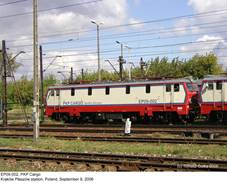
...and EP09-002.
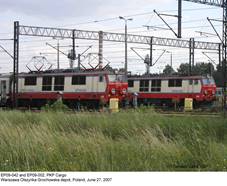
EP09-042 and EP09-002, photographed at the Warszawa
Olszynka Grochowska depot
on
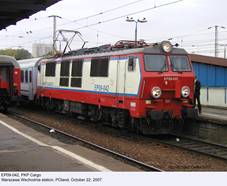
Another photo of the EP09-042: Warszawa Wschodnia station,
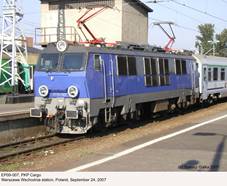
Yet different livery, this time PKP InterCity blue; EP09-007, Warszawa Wschodnia station,
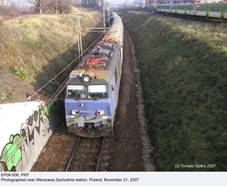
EP09-008 in the same livery, photographed near the
Warszawa Zachodnia station on
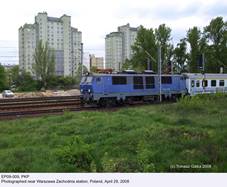
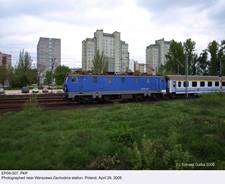
Three more pictures from this location, all taken
on
...EP09-007, both in the PKP
InterCity blue...
...and EP09-045 from PKP
Cargo.
Another picture of the EP09-045, taken at the Warszawa
Wschodnia station on July 10, 2008…
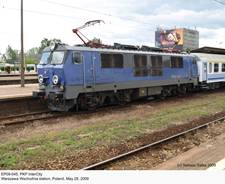
…and yet another, this time in the PKP InterCity
blue; May 28, 2009.
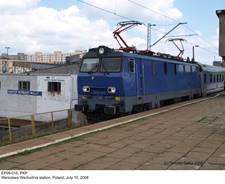
EP09-015, Warszawa Wschodnia, July 10, 2008.
Another picture of the EP09-009, taken at the Poznań Główny station on
Blue livery is also presented by two EP09s,
photographed at the Warszawa Wschodnia station:
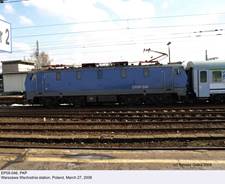
EP09-046 (
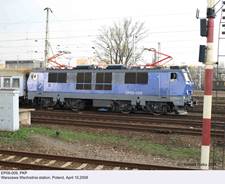
...and EP09-009 (
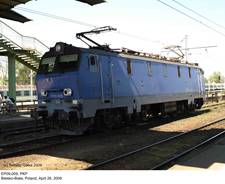
Another picture of the EP09-009, taken at the Bielsko-Biała station on April 26, 2009.
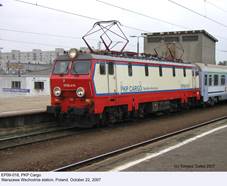
More photos taken at Warszawa Wschodnia station: EP09-031,
...and EP09-018, two weeks later.
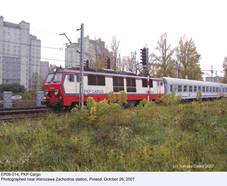
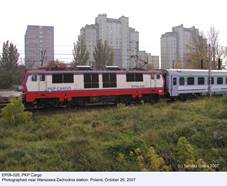
Two EP09s, photographed near the Warszawa Zachodnia station on
...and EP09-026, both with InterCity trains.
Warszawa
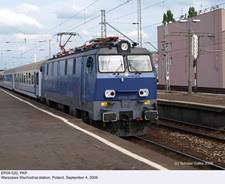
Wschodnia again: EP09-020, September
4, 2008...
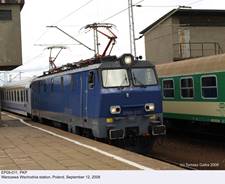
...and EP09-011, photographed eight days
later. Both carry new PKP InterCity livery.
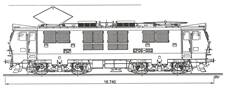
Early EP09; side drawing by M.Ćwikła (source: SK 4/1999).
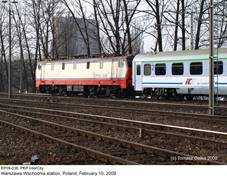
EP09-038 Leaves Warszawa Wschodnia
station with an InterCity train to Kraków. PKP
Cargo livery has been retained, but logo has been painted over; February
10, 2009.
The same locomotive and location, but over
eight years later: May 18, 2017.
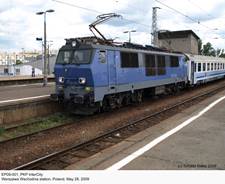
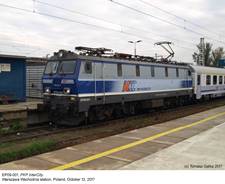
The same location, May 28, 2009: EP09-001…
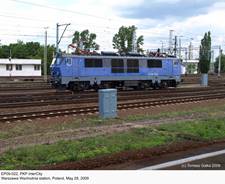
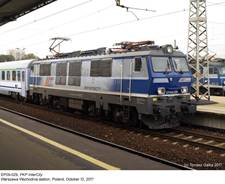
…EP09-022…
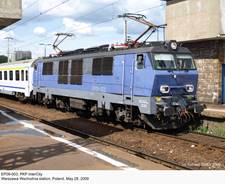
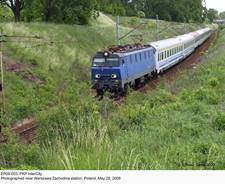
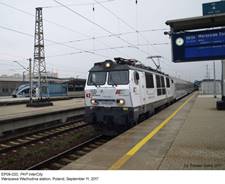
…and EP09-003.
Another picture of EP09-003, taken a few
hours later near Warszawa Zachodnia station.
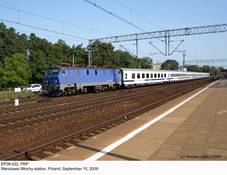
EP09-022 passes by the Warszawa Włochy station; September 15, 2009.
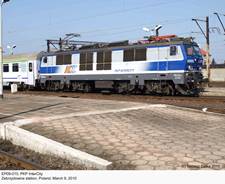
EP09-010 displays new (ultimate?) version of
the PKP InterCity livery: Zebrzydowice,
March 9, 2010.
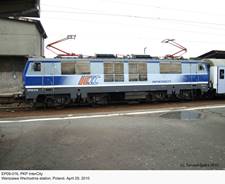
New livery is also displayed by the EP09-016,
photographed at the Warszawa Wschodnia station on
April 29, 2010.
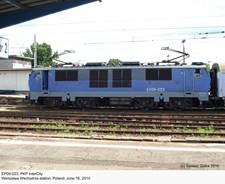
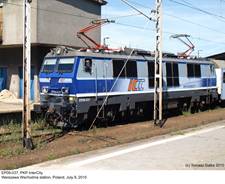
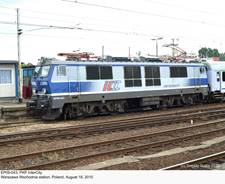
The same location: EP09-023 just after
arriving with an express train from Wrocław. June
16, 2010…
…EP09-037, July 9, 2010…
…and EP09-043, August 18, 2010.
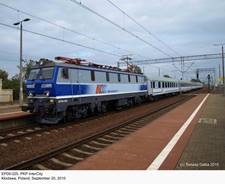
EP09-025, photographed at the Kłodawa station on September 20, 2010.
Warszawa
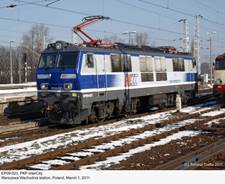
Wschodnia again: EP09-023, March 1, 2011.
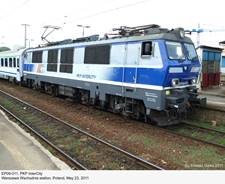
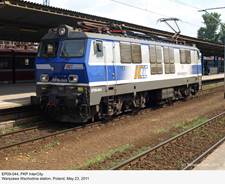
Two more pictures from this location, taken
on May 23, 2011: EP09-011...
…and EP09-044.
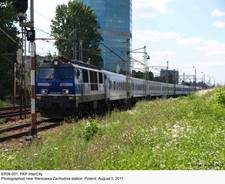
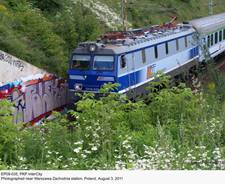
Back to one of my favorite spots near the
Warszawa Zachodnia station: EP09-001…
…and EP09-035; both pictures taken on August
3, 2011.
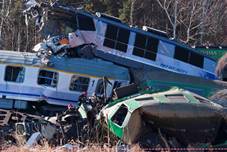
EP09-035 was destroyed in a head-on crash
with ET22-1105 between Sprowa and Sarzyny on March 3, 2012, with sixteen people losing
their lives. Photo taken on the next day by Wojciech
Janaczek (source: www.commons.wikimedia.org).
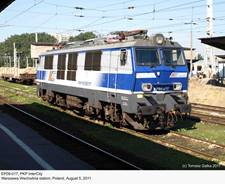
Back to Warszawa Wschodnia
and again EP09-017, but this time in the ultimate PKP InterCity
livery; August 5, 2011.
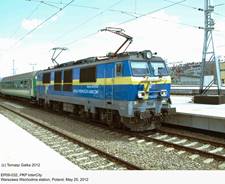
Three pictures taken at the same location on
May 25, 2012: EP09-032 …
… and EP09-036, both sporting special Euro2012
football championship liveries,…
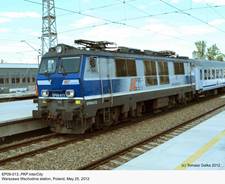
…together with a ‘plain’ EP09-013.
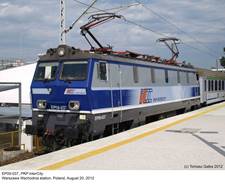
EP09-037, ready to depart with a train from
Warszawa Wschodnia to Wrocław;
August 20, 2012.
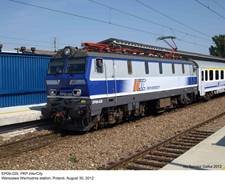
The same location, August 30, 2012: EP09-029.
Warszawa
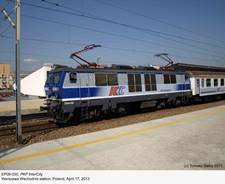
Wschodnia again. EP09-030, April
17, 2013.
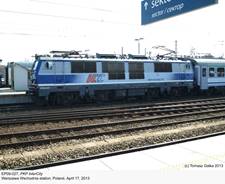
EP09-027…
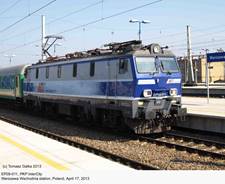
…and EP09-011, both photographed on the same
occasion.
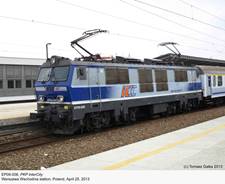
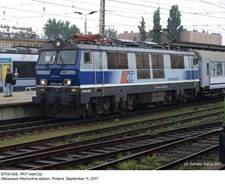
Eight days later: EP09-006.
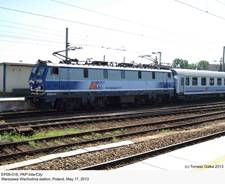
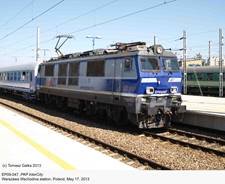
Two pictures taken on May 17, 2013: EP09-018…
…and EP09-047, the last example built.
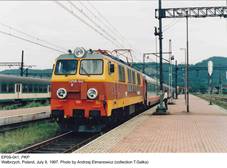
EP09-041, photographed in Wałbrzych
on July 9, 1997. Photo by Andrzej Etmanowicz (from
my collection).
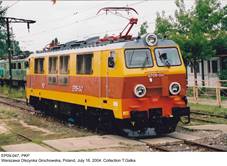
EP09-047 again, this time in old livery;
Warszawa Olszynka Grochowska,
July 16, 2004. Photo from my collection.
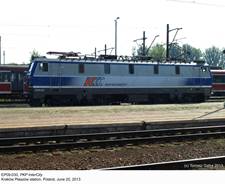
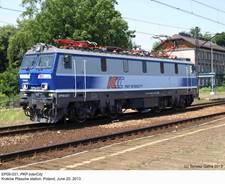
Three pictures taken at the Kraków Płaszów station on June
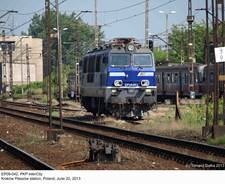
20, 2013: EP09-042…
…EP09-030…
…and EP09-031.
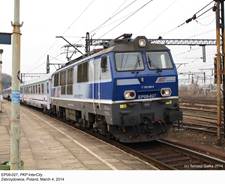
EP09-027 has just arrived at the Zebrzydowice station with a train from Vienna; March 4,
2014.
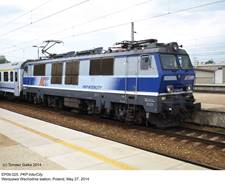
Three pictures taken at the Warszawa Wschodnia station on May 27, 2014: EP09-025…
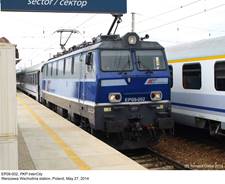
…EP09-002…
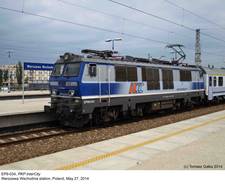
…and EP09-034.
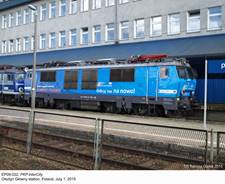
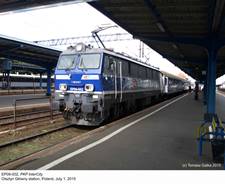
Four EP09s, photographed at the Olsztyn Główny station. EP09-022, with the PKP InterCity ad, July 1, 2015…
…EP09-002, the same day…
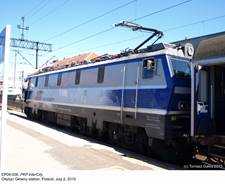
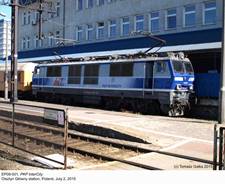
…and two pictures taken on the next day:
EP09-006…
…and EP09-001.
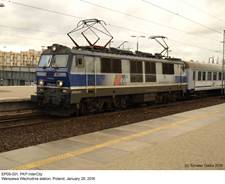
The same locomotive, photographed at the
Warszawa Wschodnia station on January 28, 2016.
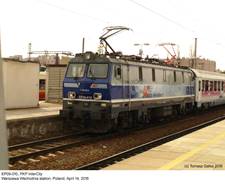
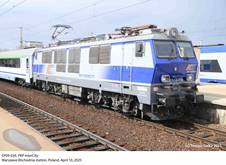
The same location: EP09-010, April 14, 2016.
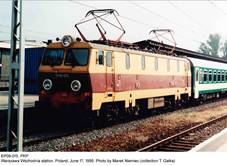
Old days: EP09-015 in its original livery,
Warszawa Wschodnia station, June 17, 1995. Photo by
Marek Niemiec (from my collection).
Back
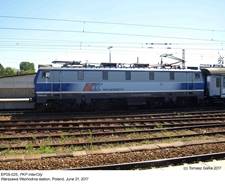
to Warszawa Wschodnia station: EP09-025, June 21, 2017.
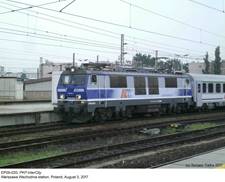
The same location: EP09-020, PKP InterCity, August 3, 2017.
And once again: EP09-001…
…and EP09-029, October 12, 2017.
Warszawa Wschodnia
again: EP09-008…
… and EP09-020, the latter sporting a special
livery related to the Polish Film Festival. September 11, 2017.
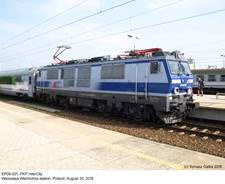
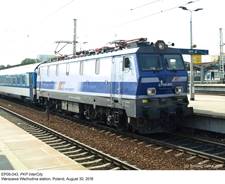
Two photos from the same location, August 30,
2018: EP09-021…
…and EP09-043.
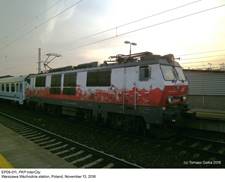
The same location and again a special livery,
this time commemorating 100th anniversary of regaining Poland’s
independence: EP09-011, November 13, 2018 (two days after the actual
anniversary).
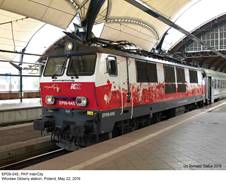
Another locomotive in the ‘Independence’
livery: EP09-045, Wrocław Główny,
May 22, 2019.
EP09-039, photographed in Katowice on May 6,
2019.
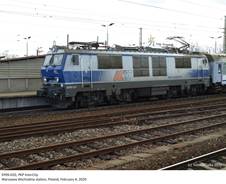
EP09-020,
Warszawa Wschodnia station, February
4, 2020.
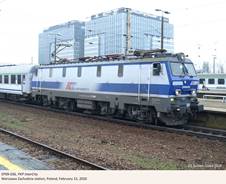
EP09-036,
Warszawa Zachodnia station, February
15, 2020.
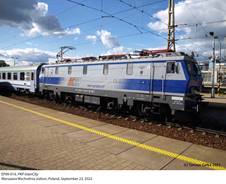
EP09-019,
Warszawa Wschodnia station, September
23, 2022.
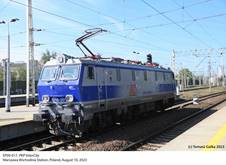
The same location: EP09-017, August 10, 2023.
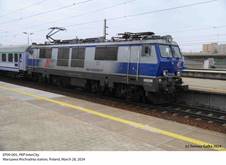
And the same location once again: EP09-005,
March 28, 2024.
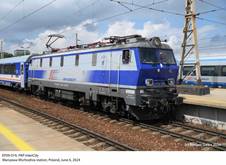
Warszawa Wschodnia
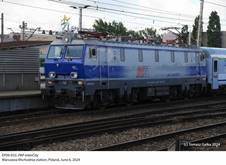
again: EP09-019…
… and EP09-033, June 6, 2024.
The same location: EP09-031, June 27, 2024.
Warszawa
Wschodnia once again:
EP09-040…
…
and EP09-039; April 10, 2025.
Back to Warszawa Wschodnia, June
26, 2025: EP09-040.
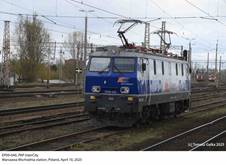
The same location, July 2, 2025: EP09-046
sporting the original, or historical, livery, restored during overhaul.
Warszawa
Wschodnia again: EP09-038, August 28, 2025. |
In early 1970s basic electric locomotives for
passenger trains in the PKP service, EU07, had maximum speed of only
125 km/h. So far this had been sufficient, but there were plans to upgrade
several principal lines and build new ones, suitable for trains attaining
even 250 km/h. In fact early 1970s were a period of optimism, or rather
over-optimism, in the entire Polish economy, but the need for faster
locomotives was obvious. Modification of 27 EU05s and 15 EU07s (new service
designations EP05 and EP08, respectively) was only an interim measure and it
was decided to develop an entirely new family of electric locomotives. This
family was to have been based on a 4000 kW Bo’Bo’
locomotive, capable of 200 km/h. In fact, this was the first attempt in
Poland to build an electric passenger locomotive of indigenous design;
previous ones were either imported or built under British license. Initial plans soon proved too ambitious and had to
be cut down, and what finally emerged in 1978 was a somehow more modest
design study, including a Bo’Bo’ locomotive with
maximum speed of only 140 km/h (type 104E), heavier six-axle Bo’Bo’Bo’ locomotive in two variants (type 204E) and twin
eight-axle locomotive intended for heavy freight trains (type 205E). Two
latter projects were soon abandoned and only 104E was proceeded with; design
was completed in 1981 and it was intended to build two prototypes at Pafawag, Wrocław, until
1984. In the meantime, maximum speed demand was increased to 160 km/h. Early
1980s were not particularly auspicious for Polish industry and economy in
general, so the first prototype was delayed by about two years. This
locomotive, designated EP09-001, was rolled out in late 1986 and service
tests began in March 1987. Results were not entirely satisfactory. Most
serious problems were engine suspension fractures and poor running qualities;
crews complained of very high temperature in the cabin. There were also many
minor shortcomings. Second prototype, EP09-002, which appeared in 1987,
differed in control systems and had factory designation 104Ea; all other
examples, with many modifications (including improved brakes and suspension,
the latter to eliminate snaking) were designated 104Eb. Minor modifications
introduced during overhauls resulted in this designation being changed to
type 104Ec. Many improvements were successively introduced during service, so
some claim that no two EP09s are entirely identical! This is, however, an
exaggeration. In fact, in late 1990s it was intended to launch a unification
program (concerning mainly equipment), to be completed until 2005. These
plans failed to materialize. Although initial type 204E project had been
abandoned, it re-appeared in 1985 as a lengthened and modified six-axle (Bo’Bo’Bo’) version of the EP09, intended for freight
trains, with maximum speed reduced to 100 km/h. Designated type 206E (service
designation ET24 being envisaged), this locomotive was a possible replacement
for ET22, having similar tractive effort combined with much better running qualities,
especially on mountain lines. Due to economical
crisis and decreasing freight traffic this project remained on the drawing
board. EP09 had more than a fair share of teething troubles
and production lagged behind schedules. It was initially intended to build
five pre-production machines in 1988, but last of them, EP09-007, was delayed
by two years. Forty more followed; last two, EP09-046 and EP09-047, were
built in late 1997 and supplied in January 1998; it may be added here that
next brand-new locomotives (class EU43 – second with this designation) were
delivered to PKP ten years later. For many years all these machines were
used principally with express trains and most of them were based in Warsaw.
Compared to some earlier types – especially EP05s, which were considered very
reliable and well-liked by crews – they never enjoyed a good reputation. In
fact, failure rate was initially rather high, but this is common with
prototype machines that feature new design concepts. What is certain is that
almost from the beginning EP09 has been a compromise between initial
ambitious plans and reality; it should be kept in mind that in 1980s
political factors excluded co-operation with Western manufacturers and
sub-contractors. Pafawag itself was
struggling for survival (to be acquired by Adtranz in late 1997 and
finally to become a part of Bombardier in 2001) and complaints concerning EP09 were not its only
problem. Be it as it was, for quite a long time years EP09
was the most modern electric locomotive in the PKP service. It enjoyed
a dubious privilege of being the last one designed and built in Poland, until
the appearance of the E6ACT ‘Dragon’ from Newag Gliwice in 2009. These locomotives hauled the most prestigious
and fastest express trains, although – due to their moderate number and
relatively low availability – they never replaced older EP08s or even EP05s.
Instead of developing this design, the problem of providing a modern electric
locomotive for PKP InterCity was initially solved – at least
temporarily – by purchasing ES64U4s from Siemens in 2008. Ultimate
replacement of EP09 – as well as EU07/EP07 – is the E4 ‘Griffin’ family from Newag, which
appeared in 2011. All locomotives of this type (with the exception of
EP09-035, which was destroyed in a head-on collision with ET22-1105 in March
2012) survived in service until late 2024. The first one to be withdrawn from
use was EP09-016, in December 2024. Until now (March 2026) seven more
followed: EP09-001, -006, -010, -015, -017, -025 and -026. Some were
cannibalized for spares, while EP09-015 and EP09-017 were scrapped in
September 2025. Prototype EP09-001 is intended for preservation in working
order as a heritage locomotive. Of the remaining 38 examples, only eight are
currently in active service. Main
technical data
References and
acknowledgments
-
Monographic article by Paweł
Terczyński (SK vol. 8/2003); -
AL, SK (various
issues). |
||||||||||||||||||||||||||||||||||||||||||||||||||||||||||||||||||||||||||||||||||||||||||||