ET23 / 181
|
|||||||||||||||||||||||||||||||||||||||||||||||||||||||||||||||||||||||||||||||||||||||||||||
|
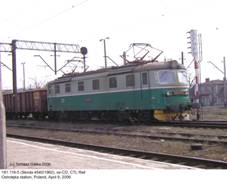
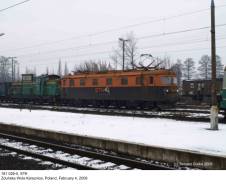
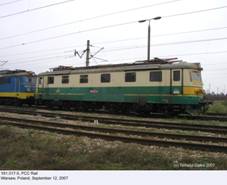
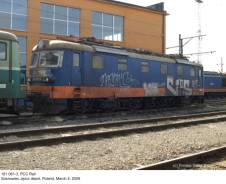
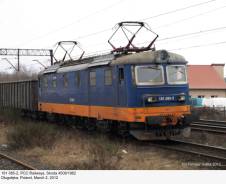
Ex-ČD 181 116-5 has
retained its original livery and designation; this machine is used by PCC Rail. Photo taken in Ostrołęka on
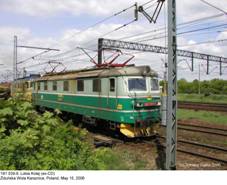
181 039-9
has also retained original livery and designation, but carries small logos of
its new operator, Lotos Kolej; photo taken near Zduńska Wola Karsznice on May 15, 2006.
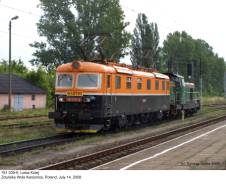
The
same example, but repainted: Zduńska Wola Karsznice, July 14, 2008.
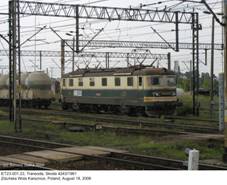
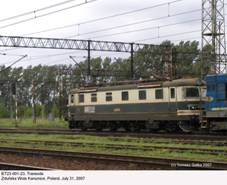
ET23-001.23, Transoda
(ex 181 009-2), photographed at the same location on
The same machine, this time double-heading with T448P-092. Zduńska Wola Karsznice,
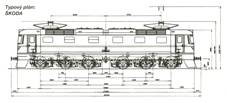
Class 181 side drawing by Škoda from AV
vol.1.
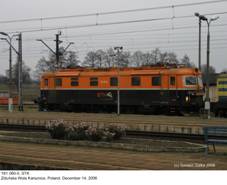
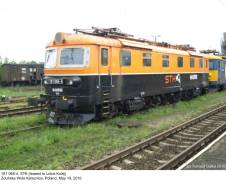
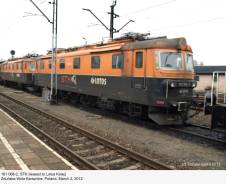
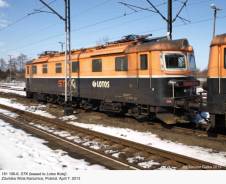
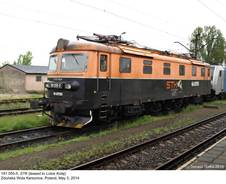
181 060-5, owned by STK
and leased to Lotos Kolej;
photo taken in Zduńska Wola
Karsznice on
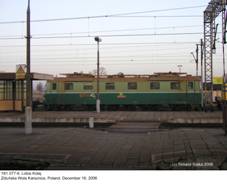
Another machine owned by STK
and leased to Lotos Kolej:
181 077-9, photographed at the same location two days later.
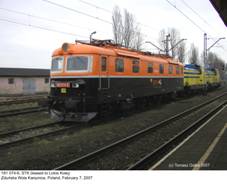
181 074-6, also owned by STK,
but leased to Lotos Kolej,
which is indicated by small yellow logos; Zduńska Wola Karsznice,
Another two locomotives, owned by STK and leased to Lotos Kolej:
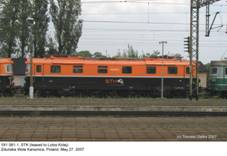
181 081-1...
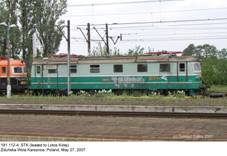
...and 181 112-4 in old Czech livery, both
photographed at the same location on
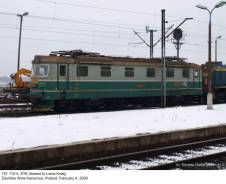
Another picture of the 181 112-4, taken on February
4, 2009; STK and Lotos Kolej logos are clearly visible and
graffiti has fortunately been removed.
Another picture taken on the same occasion: 181
026-5 enters the station with a freight train and an idle SM42.
Karsznice
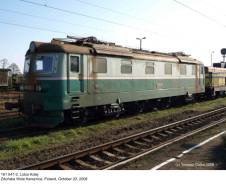
again: 181 047-2, also from Lotos Kolej, photographed on October 20,
2008.
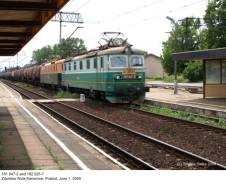
The same locomotive, this time double-heading with
the 182 025-7. Karsznice, June 1, 2009.
PCC Rail operates
coal trains between
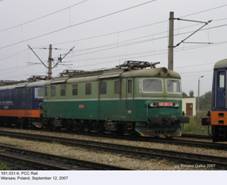
... this 181 031-6 has no logo at all...
...while 181 050-6 has been repainted and
carries full PCC Rail livery.
All three were photographed near the Żerań power
plant in
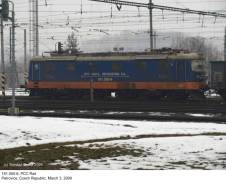
Another picture of the 181 050-5, taken in Petrovice, Czech Republic, on March 3, 2009.
181 013-6 again, this time photographed at the
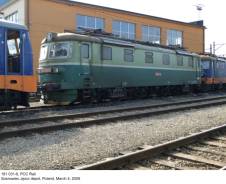
Sosnowiec Jęzor depot on March 5, 2009…
…together with graffiti-smeared 181 061-3. The
latter has the PCC Rail livery, but no logo.
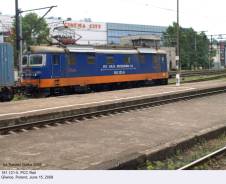
181 121-5, PCC Rail,
Gliwice station, June 15, 2008.
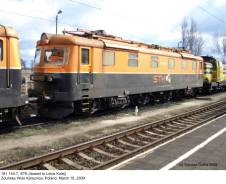
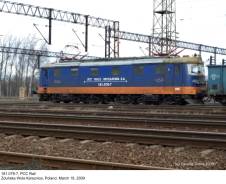
Back in Karsznice. 181
144-7, STK (leased to Lotos Kolej)…
…and 181.078-7 from PCC Rail.
Depending on the operator, type designation (181) is followed by a dot or is
not.
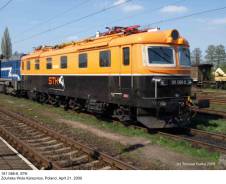
181 088-6, STK, Zduńska Wola Karsznice, April
21, 2009.
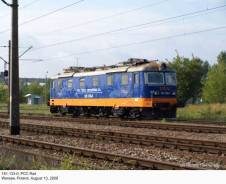
181.133-0 from PCC Rail,
photographed in Warsaw on August 13, 2009.
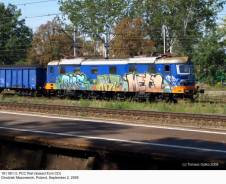
181 061-3 again, this time photographed in Grodzisk Mazowiecki on September 2, 2009. Is this really
a piece of art?!
181 085-2, photographed on the same occasion. The
small white plate below the door bears an inscription indicating that this
engine is owned by ČD and leased to PCC Rail.
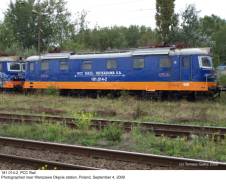
181 014-2, also from the PCC Rail
fleet, photographed near Warszawa Okęcie station on
September 4, 2009.
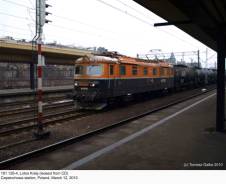
181 126-4, Lotos Kolej, photographed with a draft of
tank cars at the Częstochowa station on March 12,
2010.
Zduńska
Wola again: 181 065-4 is another STK
locomotive leased to Lotos Kolej. Photo taken on May 19, 2010.
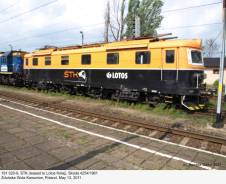
And yet another: 181 020-9, photographed at the
same location on May 13, 2011.
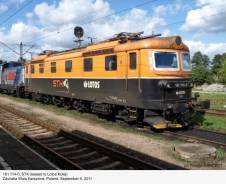
181 114-0, photographed at the same location on
September 9, 2011.
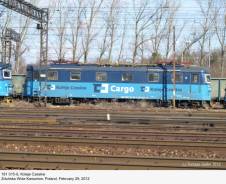
The same location: 181 015-9, owned by ČD and operated by their Polish subsidiary Koleje Czeskie. February 29, 2012.
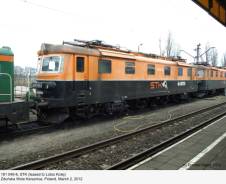
181 085-2, Długołęka,
March 2, 2012.
Two more locomotives, photographed in Zduńska Wola Karsznice on the same day: 181 049-8…
…and 181 066-2, both operated by Lotos Kolej.
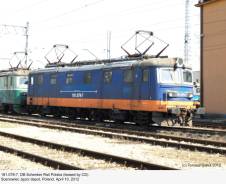
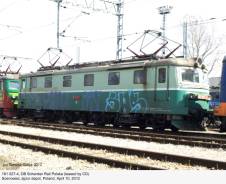
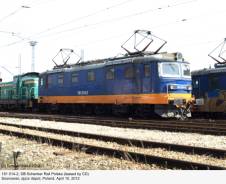
Three locomotives operated by DB Schenker Rail Polska,
photographed at the Sosnowiec Jęzor depot on April
10, 2012: 181 078-7…
…181 027-4…
…and 181 014-2.
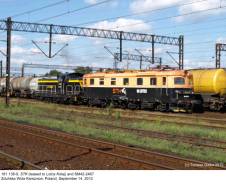
181 138-9, operated by Lotos Kolej, photographed in Zduńska Wola Karsznice on September 14, 2012.
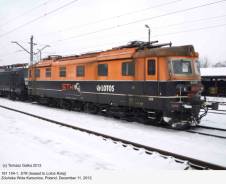
The same location and another locomotive from the
same fleet: 181 104-1, December 11, 2012.
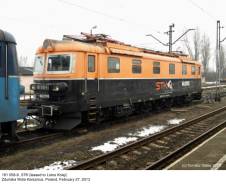
181 058-9, Lotos
Kolej again,
Zduńska Wola Karsznice, February 27, 2013.
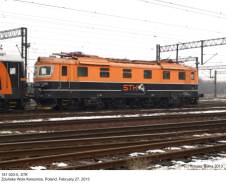
181 003-5, photographed on the same occasion.
The same location and operator: 181 106-6, April
17, 2013.
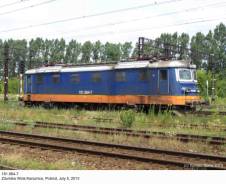
Three more pictures from this location: 181.064-7 (Škoda
4298/1961), most probably operated by STK, July 5,
2013…
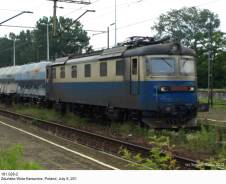
…181.028-2 (Škoda 4262/1961) from the Transoda
fleet, cut carrying no logo, photographed on the same occasion…
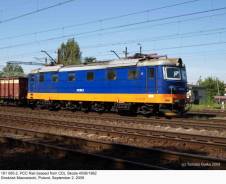
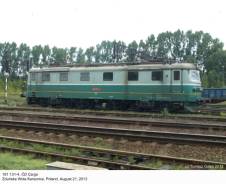
…and 181 131-4 (Škoda 4554/1962) in the ČD Cargo
livery, leased to Lotos Kolej; August 21, 2013.
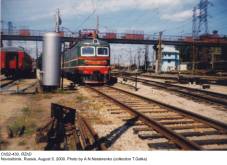
Something more exotic: Russian ChS2-430,
Novosibirsk, August 5, 2000. Photo by A.N.Nesterenko
(from my collection).
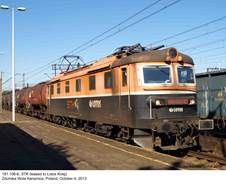
181 106-6, STK
(leased to Lotos Kolej),
photographed in Zduńska Wola
Karsznice on October 4, 2013.
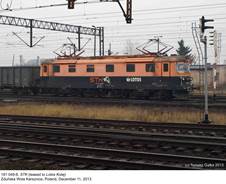
181 049-8, STK (leased
to Lotos Kolej);
the same location, December 11, 2013.
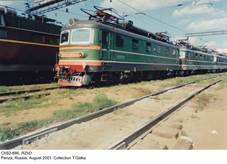
A lineup of Russian ChS2s (headed by ChS2-886),
photographed in Penza in August 2001. Photo from my collection.
181 055-5, STK
(leased to Lotos Kolej),
photographed in Zduńska Wola
Karsznice on May 3, 2014.
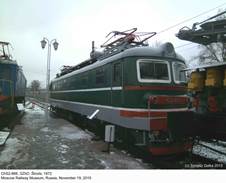
ChS2 still remains in use in Russia, but this
ChS2-888, built in 1972, has already found its way to the Moscow Railway
Museum. Photo taken on November 19, 2015.
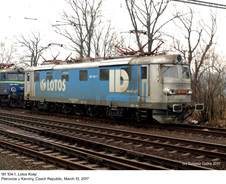
181 104-1, operated by Lotos
Kolej, photographed on March 10,
2017, in Petrovice, Czech Republic.
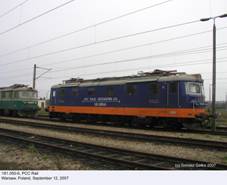
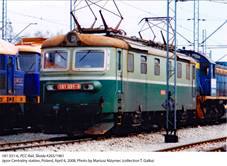
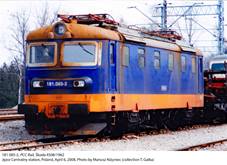
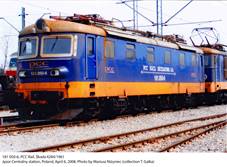
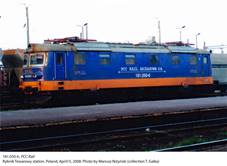
Four pictures of 181s from the PCC Rail fleet, taken by Mariusz Niżyniec (from my collection). 181 031-6, Jęzor Centralny, April 6, 2008…
… 181 085-2, the same location and date…
… 181 050-6, the same location and date…
… and another picture of this locomotive, taken at
the Rybnik Towarowy station on April 15, 2008. |
In 1958, well-known Czechoslovak Škoda works of Plzeň built two electric locomotives with factory designation 23E1 (ČSD class E669.0, later 180). These were the first six-axle electric locomotives built in Czechoslovakia after WWII. Their design was based on the successful four-axle E499.0 and they differed between themselves in many details, being basically experimental machines (however, according to AL, 180.002 was still operational with ČD in mid-2006). In 1961, their improved variant with factory designation 31E1 was ordered by ČSD in quantity and eighty examples were initially built. Second batch, numbering seventy machines, differed mainly in more powerful traction engines (factory type 31E2). Both variants were classed E669.1, this designation being later changed to 181; they were commonly nicknamed ‘Šestikolák’ (literally, ‘six-wheeler’), due to the Co’Co’ axle arrangement. Last, 150th locomotive was delivered in 1962. They were later developed into improved variants E669.2 and E669.3 (later classes 182 and 183, respectively), also built in series. 181s still remain in use with ČD, which in early 2006 had 48 examples. Further two are used by OKD Doprava a.s. Ostrava. As with many other Czechoslovakian locomotives, much larger orders came from the USSR. There were several individual variants, in SŽD service designated class ChS2 (ЧC2 in Russian script). First two prototypes (factory type 25E1) were built in 1958. They differed in having more powerful AL4846zT engines with one-hour rating of 586 kW and reduction gear ratio changed from 84:37 to 80:41. Their maximum speed was 160 km/h (in service reduced to 140 km/h) and of course they were passenger locomotives. Production variant (factory types 34E1 through 4) differed in still more powerful AL4846eT engines (700 kW), strengthened trucks and modified equipment; until 1964, 303 examples were delivered. In 1962, ChS2-232 was fitted with rheostatic braking system and served as a prototype for the modified version, classed ChS2T (T stood for ‘tormoz’ – brake). Until 1973, 639 examples were delivered in nine batches, differing in minor items of equipment (factory types 53E1 through 9). Final version, which retained the ChS2T designation, was fitted with AL4846dT engines (680/770 kW) and featured improved rheostatic braking system and entirely new, angular body, which made it externally completely different from its predecessors. This final variant (factory types 63E1 and 63E2) was built between 1974 and 1976; in all, 120 examples were delivered, bringing the grand total in the SŽD service to 1062. They still remain in use in large number with RŽD in Russia; several are probably used also by Ukrainian railways. Polish state railways PKP never ordered these locomotives. They were substantially more
powerful than six-axle ET21, but compared to ET22 had less power and less
tractive effort (35 and 42 tonnes, respectively),
being slightly heavier. First 181s appeared in Poland only in mid-2000s and
these were second-hand ex-ČD
machines. Their withdrawal has resulted from certain surplus of freight
locomotives in Czech Republic; moreover, it was decided to supplant six-axle
machines with four-axle ones, due to their lesser impact on track. First
three examples, 181 009-2 (4243/1961), 181 039-9 (4273/1961) and
181 116-5 (4540/1962), leased from ČD,
arrived in Poland in November and December 2005. According to data provided
by Petr Štefek (thanks a lot!), until March 2008 as
many as 29 181s were obtained by three private operators. Another source (SK
7/2009) gives over 40 examples transferred to Poland until mid-2009, not all
having been impressed into service. In early 2014 Polish operators had 50
locomotives of this type. Initially the largest fleet was that of PCC Rail; some of them carried the
company’s deep blue livery. Following incorporation of this operator into DB
Schenker Rail Polska
they were disposed of, mostly going to Lotos
Kolej.
Some 181s have been leased via ALZA leasing company: pretty
complicated indeed – I do feel more at ease with technical issues! As far as I know, only Transoda
company have re-designated their first
locomotive of this type as ET23-001.23 (last two digits identify the
company and their coincidence with class designation is purely incidental),
i.e. in the PKP fashion. Next two
have retained their original numbers. In all, of 150 examples built, as many
as 54 – over one-third – saw service with Polish operators, some of them
changing their assignments more than ten times! They have, however, been
outnumbered by class 182, their direct development. Despite their age, well
over forty years, these locomotives have given good service and are still
frequently encountered. Nothing, however, lasts forever. Between October 2025
and February 2026 eighteen Polish 181s were written off and scrapped. According
to www.railfaneurope.net, in March
2026 ČD had only three examples in
use. Main
technical data
1)
Excluding variants for the USSR. 2)
Total number even operated by Polish operators. 3)
In last seventy examples, AD4346gT engines, 2790
kW/3795 KM References and
acknowledgments
-
AV vol.1, LOZD, -
SK (article by Jacek Chiżyński in vol. 10/2006, also other issues); -
Petr Štefek (private
communication), - www.kolejowaklatka.pl (website by Marek Dąbrowski); |
||||||||||||||||||||||||||||||||||||||||||||||||||||||||||||||||||||||||||||||||||||||||||||